
Aloe Ferox Crystals: The History, Science and Traditional Uses of Cape Aloe
Updated: 4 hours ago
From a South African plant tradition to modern medicinal research, understanding Cape aloe begins with knowing exactly what is inside the leaf.

A friend first introduced me to Aloe ferox. That personal discovery led to conversations, sharing it with others, and eventually the beginning of Ancient Roots Botanicals.
The questions that followed were just as important as the introduction. What were these bitter crystals? How were they different from the aloe gel most people recognized? Why did a preparation with such a long history have such different descriptions in modern health literature?
The answers lead from South African landscapes to early European apothecaries, through plant chemistry and into a regulatory debate that is often oversimplified.
Aloe ferox crystals are a concentrated preparation of bitter leaf exudate, not the clear inner-leaf gel familiar from skincare. Commonly associated with the names Cape aloe and aloe bitters, this material has a documented history as a botanical laxative. Understanding its identity is essential to understanding both its uses and its precautions. (Plants of the World Online)
What Is Aloe Ferox? Understanding the Cape Aloe Plant
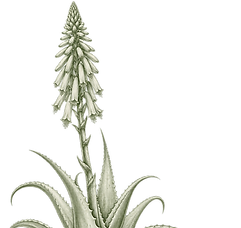
Aloe ferox is native to South Africa and Lesotho. Mature plants develop an upright stem crowned with thick, spiny leaves, often with a skirt of older, dried leaves below. Their branching flower spikes can rise above the foliage in conspicuous shades of orange and red. (Plants of the World Online)
The name ferox means fierce or warlike, referring to the plant’s formidable spines. It is a description of its appearance, rather than a scientific claim that it is stronger or more effective than other aloes. (Plants of Southern Africa)
There is another side to this imposing plant. Its flowers provide feeding opportunities for birds, and the relationship is more subtle than it first appears.
In a study published in 2019, researchers found that opportunistic nectar-feeding birds could be more effective pollinators of Aloe ferox than specialist sunbirds. The larger birds made effective contact with the flowers’ reproductive structures, while a sunbird could obtain nectar with less contact. A specialized nectar-feeding bill did not necessarily make the best pollinator. (PubMed Central (PMC))
That detail belongs in the plant’s story. Before Aloe ferox becomes a botanical ingredient, it is a living part of a landscape, with relationships that extend beyond human use.
Aloe Ferox vs. Aloe Vera: What's the Difference?
Comparisons between Aloe ferox and Aloe vera often begin with the wrong question: which plant is “better”?
A more useful question is: which part of the plant, prepared in which way, for which purpose?
Both species can provide inner-leaf gel and bitter exudate. These materials differ substantially in composition. EMA’s assessment explicitly distinguishes dried aloe juice from gel and does not treat them as interchangeable preparations. (European Medicines Agency (EMA))
Preparation | What it contains | Why it matters |
Inner-leaf gel | The clear, water-rich tissue inside the leaf. | Research on gel does not automatically apply to bitter crystals. |
Bitter exudate or latex | Material from specialized tissues near the leaf’s outer portion. | This is the material associated with Cape aloe bitters and their laxative constituents. |
Whole-leaf extract | A preparation incorporating the leaf more broadly, with composition depending on processing. | Its research findings must be interpreted according to the actual extract tested. |
Some whole-leaf products are decolorized, a processing step intended to remove anthraquinones. These are different from preparations intentionally retaining the bitter constituents. (European Medicines Agency (EMA))
This distinction helps explain apparently contradictory aloe claims. A study of a topical gel, a filtered beverage, or a whole-leaf extract may concern a different material from the bitter preparation sold as Cape aloe crystals.
How bitter exudate becomes “crystals”
Traditional Cape aloe production begins with collecting the exudate released from cut leaves. Kew describes mature leaves arranged around a collection well, allowing the liquid to drain before it is concentrated and dried into a dark, glossy mass. (Plants of the World Online)
Historical and commercial accounts describe the resulting material as lumps or “crystals.” The word is useful as a familiar product description, but it should not suggest a mineral or a purified, single chemical. Cape aloe remains a mixture of botanical constituents. Different processing methods can also produce different forms, including powdered material. (DOI)
An intriguing older name was Aloe lucida—“shining aloe.” Pharmaceutical writers used it for Cape aloe’s reflective dried preparation. It described the material’s appearance and preparation, rather than identifying another modern aloe species. (DOI)
A small dark fragment therefore carries more history than its appearance suggests. Its gloss once helped apothecaries describe it; today, chemical analysis tells us considerably more than appearance alone can.
For a closer look at the preparation’s story, see From Golden Sap to Dark Crystals.
Aloe Ferox vs. Aloe Vera: What's the Difference?
Cape aloe entered European trade by 1761. The botanical name Aloe ferox, published by Philip Miller, dates to 1768. The material was therefore being traded internationally before the species received the name used today. (https://doi.org/10.1016/j.sajb.2021.11.054)
Researchers Thomas Brendler and Ian Cock trace its commercialization through the Dutch East India Company and its appearance in pharmacopoeias during the late eighteenth century. Their historical investigation also shows how confusing older aloe names can be: a trade name, a pharmaceutical preparation and a botanical species were not always distinguished consistently. (DOI)
The export record marks a stage in international commerce, not the beginning of people’s knowledge of the plant. Nor should every ancient reference to “aloe” be assigned to Aloe ferox. Other aloe species had their own histories of use and trade. (DOI)
The documented Cape aloe story is interesting enough without borrowing legends from unrelated preparations. It connects practical plant knowledge, collection and preparation, maritime trade, and the gradual development of pharmaceutical standards.
What Do Aloe Ferox Crystals Contain? Aloin and Other Compounds
Cape aloe contains compounds known as hydroxyanthracene derivatives, including aloin-related constituents. It also contains other substances, such as chromones. The finished botanical preparation is not chemically identical to isolated aloin or aloe-emodin. (European Medicines Agency (EMA))
Its action involves an interaction with intestinal bacteria. Certain constituents reach the large intestine, where bacterial enzymes convert them into active compounds. These influence bowel movement and the handling of water and electrolytes. (European Medicines Agency (EMA))
That delayed activation helps explain why the effect is not immediate. The European medicinal monograph describes an interval of approximately 6–12 hours before a bowel movement for the preparations it covers. This is not a guaranteed response time for every person or every commercial product. (European Medicines Agency (EMA))
The bacterial connection is fascinating, but it should not be stretched into a claim that Aloe ferox “repairs the microbiome.” A compound being metabolized by bacteria is not the same as demonstrating a beneficial change in the microbial community.
Likewise, a laxative effect should be described as such. It does not, by itself, establish the removal of unspecified toxins or a general “reset” of the body.
Aloe Ferox Benefits: What Does Scientific Research Show?

The research literature contains useful findings, but the preparation and study design matter as much as the headline.
Research on bowel function
A 2010 study examined an aqueous Aloe ferox leaf extract in rats with experimentally induced constipation. Researchers reported improvements in intestinal movement and fecal measures, supporting laxative activity in that model. Because this was an animal experiment using a particular extract, it does not establish a human serving size or prove equivalence to commercial bitter crystals. (PubMed)
An older human trial, published in 1991, involved 35 adults with constipation. A combination of aloe, celandine and psyllium improved several bowel outcomes compared with placebo. It was a combination product, however, so the study cannot tell us how much of the effect came from aloe—or establish the performance of standalone Aloe ferox crystals. (PubMed)
These studies contribute to the wider picture, but neither is a direct clinical test of the product offered by Ancient Roots Botanicals.
The small human study of crystallized Aloe ferox
A 2021 study enrolled 40 adults with obesity and compared dietary treatment plus capsules described as crystallized Aloe ferox juice with dietary treatment plus placebo. The authors reported favorable changes in certain body measurements and metabolic markers. (PubMed Central (PMC))
e limitations deserve equal attention. The study was small, and three participants discontinued Aloe ferox treatment because of discomfort. The preparation was not sufficiently characterized to establish equivalence to other commercially available crystals. These findings do not establish Aloe ferox as a treatment for obesity, diabetes, or high cholesterol. (PubMed Central (PMC))
The most useful conclusion is neither that research is absent nor that every proposed benefit has been demonstrated. There is an established medicinal context for bowel effects, alongside much more limited evidence for broader claims. (European Medicines Agency (EMA))
What European Medicinal Guidance Recognizes
The European Medicines Agency’s Committee on Herbal Medicinal Products recognizes certain aloe preparations for short-term treatment of occasional constipation under its well-established medicinal use framework. This is more specific than simply acknowledging a traditional reputation. (European Medicines Agency (EMA))
However, the framework is not an approval of every aloe product. National authorities evaluate applications for individual medicines, and the monograph concerns defined preparations. EMA also explains that its assessment draws on laboratory studies of aloes and clinical evidence from other anthranoid-containing laxatives, including senna. (European Medicines Agency (EMA))
The medicinal monograph limits use to no more than one week, noting that two or three uses during that week are usually sufficient. Persistent symptoms call for consultation with a doctor or pharmacist. This is not a recommendation to take aloe every day for seven days, or to repeat the same schedule indefinitely. (European Medicines Agency (EMA))
An important later development came in 2022. After considering additional experimental evidence, the committee decided by majority not to revise the existing monograph. It nevertheless retained the precautions and said further research on well-characterized materials was needed to resolve potential concerns—questions about possible changes to genetic material, although this was inconclusive, no surprise. (European Medicines Agency (EMA))
The interpretation is therefore measured: European medicinal authorities have retained a defined, restricted role while continuing to acknowledge uncertainties. That is neither blanket rejection nor unrestricted endorsement.
Why European Good-Supplement Rules are Different
“Europe allows it” is an incomplete description because medicines and food supplements follow different regulatory pathways.
The European Food Safety Authority assessed hydroxyanthracene derivatives in foods and supplements. Its 2018 opinion raised concerns about genotoxicity and carcinogenicity and could not establish a daily intake free of health concern. The assessment went beyond the familiar possibility of discomfort or diarrhea after excessive use. (EFSA)
In 2021, the European Commission adopted prohibitions in the food framework covering substances including aloe-emodin and emodin, as well as preparations from aloe leaves containing hydroxyanthracene derivatives. (Eur-Lex)
The legal position subsequently became contested. The EU General Court annulled relevant provisions on November 13, 2024, and the Commission appealed. A 2025 court order explains that regulatory annulments are deferred while timely appeals remain unresolved. (InfoCuria)
As of November 9, 2026, the appeal proceedings remain pending. In September 2026, an Advocate General recommended setting aside the challenged judgments and returning the cases to the General Court. That opinion is not a final judgment, and the litigation should not be presented as a scientific declaration that all aloe preparations are safe. (InfoCuria)
For readers, the central distinction is straightforward: recognition of a limited medicinal use does not automatically authorize the same ingredient for routine consumption as a food supplement.
What the FDA’s Aloe Decision Actually Meant
In the United States, the regulatory history is often compressed into the statement that “the FDA banned aloe.” That is too broad.
In a final rule issued on May 9, 2002, FDA determined that aloe ingredients had not been established as generally recognized as safe and effective for use in OTC laxative drugs. The rule became effective on November 5 that year. (GovInfo)
The record contains an important detail. FDA had requested further safety evidence. It received submissions concerning bisacodyl and senna, but reported receiving no comments or data for aloe or cascara in response to that request. The decision therefore involved unresolved evidence requirements, rather than a finding that every aloe preparation was harmful at every dose. (GovInfo)
The rule addressed an OTC-drug pathway; it did not establish the safety or lawful marketing status of every product labeled as an aloe supplement.
FDA does not approve dietary supplements for safety and effectiveness before sale. Companies remain responsible for meeting applicable safety, manufacturing and labeling requirements, and a product’s overall intended-use claims can affect its regulatory classification. (U.S. Food and Drug Administration)
Neither a dietary supplement label nor a foreign medicinal monograph constitutes FDA approval. Understanding the regulatory distinction is essential when evaluating Aloe ferox products in the United States.
Aloe Ferox Side Effects: Safety and Precautions
Both botanical preparations and conventional treatments deserve a balanced evaluation of their benefits and limitations. Many established approaches to occasional constipation can produce unwanted digestive effects, including mild cramping or discomfort. The important considerations are the preparation, amount used, frequency of use, and individual response. (CGH Journal)
The existence of side effects is therefore not, on its own, a reason to dismiss a botanical preparation. But it does not establish that all alternatives have equal risks, either. The evidence, preparation, dose, duration and individual circumstances must be considered separately.
As with many botanical preparations, Aloe ferox may cause temporary digestive discomfort or loose stools, particularly when used in excessive amounts. Prolonged use may also affect fluid and electrolyte balance. These considerations highlight the importance of moderate, occasional use and respecting the body's individual response.
What the cancer-related research tested
A frequently cited National Toxicology Program study found large-intestinal tumors in rats exposed over two years to nondecolorized Aloe vera whole-leaf extract. It was not a human trial of occasional Aloe ferox bitter-crystal use. (National Toxicology Program)
That difference limits direct conclusions about another preparation. It does not make the findings irrelevant: regulators also examine shared constituents and the wider toxicological evidence.
A 2021 experiment using dried Aloe ferox juice found no DNA damage in the colon cells examined through a particular mouse comet assay. This was a useful negative finding, but the experiment did not establish lifetime safety or assess every possible form of genetic damage. (PubMed Central (PMC))
EFSA reviewed that evidence in 2022 and did not change its earlier conclusions. It considered the preparation’s constituent concentrations and possible effects of other components important limitations when interpreting the negative result. (EFSA)
The evidence is more nuanced than either “all aloe causes cancer” or “the concern has been disproved.” Sensible use includes recognizing uncertainties that cannot be resolved simply by avoiding an immediately uncomfortable dose.
When professional advice matters
Medicinal guidance excludes use during pregnancy and breastfeeding, and EMA excludes children under 12. It also identifies intestinal obstruction, inflammatory bowel disease, unexplained abdominal pain and severe dehydration as contraindications. (European Medicines Agency (EMA))
People with kidney disorders, or those taking certain heart medicines, diuretics, corticosteroids or other products affecting electrolyte balance, should seek professional advice before use. Health Canada’s oral aloe monograph also advises stopping if diarrhea or an allergic reaction occurs and consulting a healthcare professional if symptoms persist or worsen. (Health Canada)
Recurring constipation deserves investigation rather than an indefinite cycle of self-treatment.
Why There is no Universal “crystal-sized” Serving
Traditional botanical preparations have often been measured using familiar comparisons, such as a pea or match head. While these descriptions provide a practical visual reference, they are approximate rather than precise measurements. The concentration of active constituents can also vary between preparations, making product quality, composition, and responsible use important considerations.
Medicinal standards distinguish between dried botanical material and preparations standardized to measured constituents. Directions expressed as an amount of hydroxyanthracene derivatives cannot simply be treated as the same number of milligrams of loose crystals. (European Medicines Agency (EMA))
This is why a guide to the plant should not become an improvised dosing calculator. Product-specific directions need to be supported by the identity and composition of the actual preparation, together with its safety assessment.
The practical question is not just “How much does this weigh?” It is also “What exactly is this material, and what evidence supports its directions?”
What to Look for when Evaluating Aloe ferox Crystals
For a concentrated botanical, useful purchasing questions go beyond the word premium.
Start with identity. Does the supplier identify the species and specify bitter exudate rather than inner-leaf gel or whole-leaf material? Is the origin stated clearly? Can the supplier explain how the preparation was produced?
Then look at the meaning of testing. A useful report identifies the batch, the substance measured, the analytical method, units and results. “Laboratory tested” is less informative without that context. Relevant contaminant testing, traceability and storage information are also worth asking about. These questions support the broader responsibility manufacturers have to establish product safety and quality. (U.S. Food and Drug Administration)
Appearance has a place, but a photograph cannot establish chemical composition. A darker fragment, stronger bitterness or larger piece is not proof of superior quality.
The same restraint should apply to sustainability claims. Ask about documented sourcing practices rather than assuming that “wild harvested” automatically means responsibly harvested. Kew’s species profile notes concerns about the pressure that increasing commercial demand could place on wild populations. (Plants of the World Online)
A thoughtful supplier should welcome precise questions. They help turn an unfamiliar botanical into an informed purchasing decision.
A Tradition Worth Understanding Carefully

My introduction to Aloe ferox began through a friend, sparking a curiosity that eventually inspired Ancient Roots Botanicals. That personal experience led me to explore the plant's remarkable history, traditional applications, and modern scientific research. I believe botanical knowledge is best appreciated when personal experience, historical wisdom, and scientific understanding are considered together.
That distinction is part of the story behind Ancient Roots Botanicals. Cape aloe has earned a place in botanical history and in defined medicinal practice. Its story includes the skill of preparation, the language of early apothecaries, and continuing scientific scrutiny. Appreciating that history does not require turning the plant into a cure-all—or dismissing every uncertainty as a misunderstanding. (DOI)
The most useful approach is specific: know the plant, know the preparation, understand the evidence, and respect its limits.
That is how traditional botanical knowledge can be carried forward without losing either its interest or its integrity.
Readers interested in the product format and purchasing information can explore our Aloe Ferox Bitter Crystals.
For an example of a clearly identified bitter leaf-exudate preparation, see our Aloe Ferox Crystals — 1 Tin (25.5 g), with product details, ingredients, and purchasing information.
Hope you got something out of this article, if your inclined leave a comment or share with someone you think would find this information helpful, please do. Until next time.
Continue Exploring Aloe Ferox
Curious how Aloe ferox sap becomes the dark, bitter crystals used for generations? Discover the traditional harvesting and preparation process in our article, From Golden Sap to Dark Crystals.
This article is published by Ancient Roots Botanicals, which sells Aloe ferox crystals. Research and regulatory conclusions discussed here concern the preparations described in those sources; they do not establish approval or clinical testing of our particular product. This information is not a substitute for individualized medical advice. These statements have not been evaluated by the Food and Drug Administration. This product is not intended to diagnose, treat, cure, or prevent any disease.

