
Aloe Ferox vs. Aloe Vera: Key Differences, Uses & Benefits
Updated: 4 hours ago
From clear gel to bitter crystals, discover what makes these two remarkable aloe plants different.
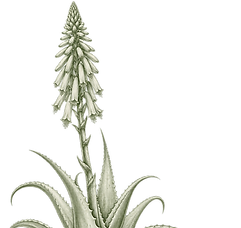
Aloe vera is the familiar one. You may have a plant growing on a windowsill or a bottle of its soothing gel in your bathroom. Aloe ferox, on the other hand, has a different character. Native to southern Africa, it grows into an imposing plant with thick, thorn-edged leaves and towering clusters of colorful flowers.

Both plants have been valued for generations, yet they offer distinct botanical properties and have developed different traditions of use.
While Aloe vera is best known for its clear, moisture-rich gel, Aloe ferox has earned a particular reputation for the intensely bitter sap harvested from its leaves. Once concentrated and cooled, this sap becomes the dark, solid material traditionally known as Cape aloe bitters, or Aloe ferox crystals.
So, what really separates these two plants? Is one more potent than the other? And why have people turned to different aloe preparations for such different purposes? The answers begin with the plants themselves.
Aloe Ferox vs. Aloe Vera: The Key Differences
Although they belong to the same botanical genus, Aloe ferox and Aloe vera are two distinct species.
Feature | Aloe Ferox | Aloe Vera |
Common name | Cape Aloe, Bitter Aloe | Aloe Vera, Barbados Aloe |
Native origins | Southern Africa | Northern Oman, now cultivated worldwide |
Growth habit | Tall, often with a substantial trunk | Short-stemmed, usually forming clusters |
Leaves | Thick, with prominent marginal teeth and sometimes surface spines | Thick, fleshy, with smaller marginal teeth |
Flowers | Usually vibrant orange to red | Usually yellow |
Traditional preparations | Concentrated bitter sap, dried Cape aloe crystals | Inner-leaf gel, as well as bitter leaf preparations |
Common modern applications | Botanical bitters and various cosmetic ingredients | Skincare, personal care, and processed aloe products |
The distinction extends beyond appearance. Both plants contain different substances within their leaves, and the part harvested determines the properties of the final preparation.
Aloe Ferox: South Africa's Remarkable Cape Aloe
Aloe ferox has long been associated with the rugged landscapes of South Africa, where mature specimens may tower several meters above the surrounding vegetation.
Its name is particularly fitting. The Latin ferox means fierce or wild, a reference to the formidable spines found along its leaves. Yet behind this striking appearance lies a botanical tradition that has endured for generations.

The Tradition of Harvesting Bitter Sap
For centuries, harvesters have collected the bitter exudate from Aloe ferox leaves.The traditional method is remarkably straightforward. Leaves are carefully cut and arranged so that their golden-yellow sap can drain into a collecting vessel.
This liquid is intensely bitter and contains naturally occurring compounds known as hydroxyanthracene derivatives, including aloin.
The collected sap is then concentrated through evaporation. As it cools, it hardens into a dark, glossy substance that can be broken into smaller pieces.
These are the traditional Aloe ferox crystals, also called Cape aloe bitters. Unlike the clear gel familiar to most consumers, bitter crystals are a concentrated preparation of the leaf's exudate.
The harvesting and processing of Cape aloe also form part of South Africa's botanical heritage. The trade has provided livelihoods for rural communities and remains an important example of a traditional plant resource entering modern commerce.
Sources: South African National Biodiversity Institute and CITES — Aloe Ferox and South African Livelihoods.
For a closer look at this fascinating process, read our article, Aloe Ferox Crystals: The Secret of Golden Sap.
Aloe Vera: The Familiar Gel-Bearing Aloe
Aloe vera has followed a different path into modern households. Today, it is one of the most recognizable botanical ingredients in skincare products, cosmetics, and personal-care formulations.
Its thick leaves contain a generous amount of clear inner gel, composed primarily of water alongside naturally occurring polysaccharides and other compounds.
One of the most studied polysaccharides in Aloe vera is acemannan, a mannose-rich compound that has attracted scientific interest.
The gel is particularly popular in moisturizers and products intended to help maintain skin hydration. But an important distinction is often overlooked.
Aloe vera also contains bitter leaf exudate, and Aloe ferox also contains inner gel.
The difference is not that one species possesses an entirely different kind of leaf. Rather, the two species have developed different commercial traditions, and their preparations can vary considerably in chemical composition.
The Most Important Difference: Aloe Gel vs. Bitter Aloe Sap
When people compare Aloe ferox with Aloe vera, they are frequently comparing two very different parts of the aloe leaf without realizing it. Understanding this distinction makes the rest of the comparison much clearer.
1. The Clear Inner Gel
The inner portion of an aloe leaf contains a transparent, water-rich gel.
This material contains polysaccharides, including compounds that vary between aloe species.
Aloe vera gel is widely used in cosmetic preparations, particularly those developed for skin hydration.
Aloe ferox also produces gel, and researchers have investigated its chemistry and potential cosmetic applications.
2. The Bitter Leaf Exudate
Within tissues associated with the leaf's outer region is a yellow, intensely bitter substance commonly called aloe latex or bitter exudate.
This material contains hydroxyanthracene derivatives such as aloin. These compounds are associated with the traditional stimulant-laxative action of certain aloe preparations.
When Aloe ferox exudate is collected and concentrated, it becomes the familiar dark Cape aloe material.
3. Whole-Leaf Aloe Preparations
Some commercial aloe products are made from whole leaves rather than separating the gel and bitter fractions.
Processing techniques may be used to remove or reduce specific constituents. Consequently, a bottle labeled simply "aloe juice" may contain something very different from traditional bitter aloe crystals. This is why the species, the part of the leaf, and the preparation method are more informative than the word "aloe" alone.
Sources: National Center for Complementary and Integrative Health and European Medicines Agency — Aloe Preparations.
Aloe Ferox vs. Aloe Vera: Uses and Benefits
Both plants contain compounds that have attracted scientific interest, although the evidence differs according to the preparation being studied.
Aloe Vera and Skin Hydration
Aloe vera's reputation in skincare is supported by research into cosmetic formulations containing its gel. A study published in 2006 investigated the moisturizing effects of formulations containing freeze-dried Aloe vera extract.

Researchers observed improvements in skin hydration under the study conditions, helping explain why Aloe vera remains a popular ingredient in moisturizers. Other studies have explored aloe gel in connection with skin recovery and wound care, although results cannot automatically be applied to every commercial product.
The important point is that the evidence generally concerns particular gel preparations, not bitter aloe crystals.
Aloe Ferox and Traditional Bowel Regularity
Aloe ferox has a long history of use as a botanical bitter, particularly in preparations associated with occasional constipation. Its bitter exudate contains naturally occurring anthranoid compounds that influence activity in the large intestine.
These compounds act through mechanisms associated with intestinal movement and the handling of water within the bowel.
The European Medicines Agency recognizes specified dried aloe juice preparations, including those derived from Aloe ferox, for the short-term treatment of occasional constipation.
That recognition applies to defined herbal medicinal preparations. It should not be interpreted as proof that every commercially available Aloe ferox crystal product has identical composition, dosage, or clinical effects.
Nevertheless, it illustrates how a traditional botanical preparation continues to have a place in formal European herbal medicine.
Aloe Ferox and Antioxidant Research
Scientists have also investigated antioxidant activity in preparations made from Aloe ferox.
Laboratory research has identified antioxidant activity in certain gel extracts, opening the door to further investigation of the plant's chemistry.
This is an interesting area of botanical research, although laboratory antioxidant findings do not automatically establish a health benefit when a person consumes a product.
Aloe Ferox Gel in Skincare
Although Aloe vera receives most of the attention in the skincare market, Aloe ferox gel has also been investigated for cosmetic applications. A human study published in 2014 compared gel preparations from Aloe ferox, Aloe vera, and Aloe marlothii.
Researchers observed differences in skin hydration and responses to experimentally induced redness. Some results were encouraging, while others showed limitations in the particular formulations being tested.
The findings reinforce an important principle: a botanical ingredient's performance depends on the preparation and the purpose for which it is used.
Source: Comparative Aloe Skin Study — 2014.
Is Aloe Ferox Stronger Than Aloe Vera?
This is one of the most common questions surrounding these two plants. You may encounter claims that Aloe ferox is several times stronger, contains dramatically more nutrients, or possesses substantially greater medicinal activity than Aloe vera.
Such comparisons are appealing, but the answer depends on what is actually being measured.
For example, concentrated bitter aloe exudate contains very different constituents from clear inner gel. A dried botanical preparation will also have a different concentration of material than a fresh, water-rich gel.

However, that does not mean Aloe ferox is universally superior. A scientific analysis of 101 Aloe ferox exudate samples found considerable variation in the concentration of compounds such as aloin A and aloin B.
Differences occurred among samples collected from different locations, highlighting the natural variability of botanical materials. Even within one species, growing conditions, harvesting methods, and processing can influence composition.
A more meaningful comparison asks what the product contains, how it was prepared, and what purpose it is intended to serve.
For someone looking for a moisturizing skin gel, a concentrated bitter crystal would not be the appropriate substitute.
Similarly, a cosmetic Aloe vera gel is not equivalent to a traditional dried Cape aloe preparation.
They are different botanical products with different purposes.
Why Traditional Aloe Preparations Still Deserve Attention
It is easy to assume that the history of a medicinal plant belongs entirely to the past.
Yet modern pharmaceutical science emerged in part from centuries of observing and investigating naturally occurring compounds.
Many important medicines have roots in plants, fungi, and other natural sourcesTraditional botanicals, however, do not always receive the same level of commercial research investment as newly developed pharmaceutical products.
One reason is economic. Familiar natural materials can be more difficult to protect through exclusive commercial rights, making large clinical development programs less attractive to investors.
This does not mean that unfavorable findings about herbal products should be dismissed, or that conventional medicines are inherently inferior to natural preparations. It does mean that the absence of extensive modern trials should not automatically erase a plant's historical significance.
Traditional knowledge can identify promising areas of investigation. Good scientific research can then examine those traditions, identify useful compounds, clarify limitations, and determine how particular preparations behave.
Natural products deserve careful research rather than automatic dismissal or unquestioning acceptance.
For Aloe ferox, this approach allows us to appreciate its remarkable history while continuing to learn more about its chemistry and traditional applications.
Sources: FDA Botanical Drug Development Discussion and World Health Organization — Traditional Medicine Research.
Understanding Aloe Ferox and Digestive Comfort
When discussing preparations traditionally used for bowel regularity, it is important to distinguish the underlying discomfort associated with constipation from the effects of a particular product.
Constipation itself can lead to bloating, abdominal fullness, and cramping. These symptoms may already be present when someone begins addressing infrequent bowel movements.
At the same time, bitter aloe preparations can themselves cause abdominal cramps or diarrhea. New or worsening discomfort following their use should not automatically be attributed to constipation or assumed to be a normal part of the process.
The aim of addressing occasional constipation is to restore comfortable bowel movements, not to create additional discomfort. As with other stimulant laxatives, more is not necessarily better.
The European Medicines Agency's herbal monograph describes short-term use, generally no longer than one week, for the specified dried aloe juice medicines. Prolonged or excessive use may disturb fluid and electrolyte balance.
Bitter aloe preparations are not appropriate for everyone, including during pregnancy or breastfeeding, for children under 12, or for people with certain intestinal conditions. People taking medication should also check for potential interactions. Persistent constipation, significant abdominal pain, or symptoms that worsen deserve appropriate medical attention.
Sources: EMA Herbal Monograph and NIDDK — Constipation Symptoms and Causes.
What Do Regulatory Authorities Say About Aloe?
Aloe has been examined by health authorities in both the United States and Europe, although the regulatory approaches differ.
In the United States, the FDA's 2002 decision concerning aloe-derived stimulant laxatives addressed whether those ingredients had been demonstrated to be generally recognized as safe and effective for use in nonprescription laxative drugs.
The decision did not amount to a universal prohibition on every aloe product. Nor did it constitute an approval of aloe dietary supplements.
In Europe, the European Medicines Agency maintains a herbal monograph recognizing specific dried aloe juice preparations for short-term treatment of occasional constipation.
European food regulations concerning certain hydroxyanthracene derivatives have also been the subject of scientific review and legal proceedings.
These distinctions matter because regulatory decisions frequently concern specific ingredients, preparations, intended uses, and legal categories rather than an entire botanical species.
Sources: FDA — 2002 Final Rule and EMA — Aloe Herbal Medicines.
What About Studies Raising Safety Concerns?
Some research has raised legitimate questions about particular aloe preparations, especially non-decolorized whole-leaf extracts.
For example, long-term animal research involving non-decolorized whole-leaf Aloe vera extract identified intestinal tumors in rats under the experimental conditions.
That study did not examine human use of Aloe ferox crystals or the topical application of inner-leaf gel. The distinction is important, although it does not establish that other aloe preparations are automatically safe.
Similarly, favorable findings from laboratory or animal studies cannot establish long-term safety in humans without further evidence. The most useful way to understand any research finding is to consider the preparation being tested, the quantity used, the duration, and whether the findings apply to people.
This provides a more accurate picture than broad statements describing every aloe product as either entirely beneficial or inherently harmful.
Sources: National Toxicology Program — Aloe Vera Whole-Leaf Extract and EFSA — Review of Hydroxyanthracene Evidence.
How to Choose Between Aloe Ferox and Aloe Vera
Rather than searching for one universally superior aloe, it helps to begin with the type of product you actually want.
For skin hydration: Look for a well-formulated topical product containing aloe gel. Aloe vera is widely used for this purpose, although Aloe ferox gel can also appear in cosmetic preparations.
For traditional bitter aloe preparations: Look for a clearly identified product made from the appropriate leaf exudate, with suitable quality information and directions.
For aloe drinks: Determine whether the preparation contains inner-leaf gel or processed whole-leaf material. Products sold under the general name "aloe juice" can differ considerably.
For any concentrated botanical: Quality, preparation methods, labeling, and appropriate use deserve more attention than exaggerated claims of strength.
Aloe ferox and Aloe vera each have their own place in the world of botanicals.
Understanding those differences allows their individual qualities to be appreciated without confusing one preparation for another.
Frequently Asked Questions
Is Aloe ferox the same as Aloe vera?
No. They are two distinct species belonging to the Aloe genus. Aloe ferox is native to southern Africa and is closely associated with the traditional Cape aloe bitters trade. Aloe vera is particularly well known for its inner-leaf gel and widespread use in cosmetics.
Is Cape Aloe another name for Aloe ferox?
Yes. Cape Aloe is a common name for Aloe ferox. The term Cape aloes is also used commercially for the concentrated, dried bitter material traditionally prepared from aloe leaf exudate.
Are Aloe ferox crystals the same as Aloe vera gel?
No. Traditional Aloe ferox crystals are made by concentrating bitter leaf exudate. Aloe vera gel refers to the clear, water-rich material found inside the leaf. Their chemical compositions and customary uses differ.
Does Aloe vera contain aloin too?
Yes. Aloin is not exclusive to Aloe ferox. Bitter exudates from Aloe vera and certain other aloe species can also contain aloin-related compounds. The quantity present in a finished product depends on the preparation and processing.
Is Aloe ferox more potent than Aloe vera?
Not in every application. A concentrated bitter exudate is very different from a fresh gel, but comparisons of potency must refer to a specific compound or measured effect. The available evidence does not establish that Aloe ferox is universally stronger or better.
Can Aloe ferox be used for skincare?
Yes. Aloe ferox gel has been studied and is used as an ingredient in certain cosmetic preparations. However, traditional bitter crystals should not be confused with a finished skincare gel.
Can Aloe ferox bitter preparations be used every day?
The European Medicines Agency describes defined dried aloe juice preparations for short-term treatment of occasional constipation, rather than continuous daily use. Ongoing bowel difficulties should be assessed to determine an appropriate approach.
Two Remarkable Plants, Each With Its Own Story
Aloe vera and Aloe ferox share a botanical ancestry, yet centuries of cultivation, harvesting, and human experience have given each a distinctive place in herbal traditions. Aloe vera is celebrated for its moisture-rich inner gel and familiar role in skincare.

Aloe ferox carries a particularly fascinating heritage, from its towering presence in the South African landscape to the traditional collection of its intensely bitter golden sap.Neither plant needs to be declared universally superior to appreciate what makes it remarkable.
By understanding the leaf, the preparation, and the evidence behind its uses, we can make more informed choices while preserving valuable knowledge of the natural world.
At Ancient Roots Botanicals, we believe that botanical traditions deserve both appreciation and careful understanding.
If you're interested in exploring the traditional Cape Aloe preparation discussed in this article, Ancient Roots Botanicals offers premium quality and batch tested South African Aloe Ferox Crystals.
Discover more about the remarkable history of Cape Aloe in our comprehensive guide to Aloe Ferox Crystals, their science, history, and traditional uses.
This article is provided for educational purposes and is not intended to replace individualized medical advice. The evidence discussed concerns specific botanical preparations and should not be assumed to apply equally to every finished aloe product.

